
 Feedback

Public-Private Partnerships in Physical Activity and Sport
Author: Norman O'Reilly, Michelle Brunette
$52.00 USD
With resources for not-for-profit public sector organizations proving increasingly scarce, partnerships with the private sector are becoming progressively more important to the growth and support of not-for-profit organizations. Frequently, private sector organizations are seeking not-for-profit physical activity, health, and sport partners for the valuable and unique links to potential markets and brand associations. This mix creates controversy over if, how, and at what cost public health and physical activity goals can be achieved in partnership with private, profit-driven organizations.
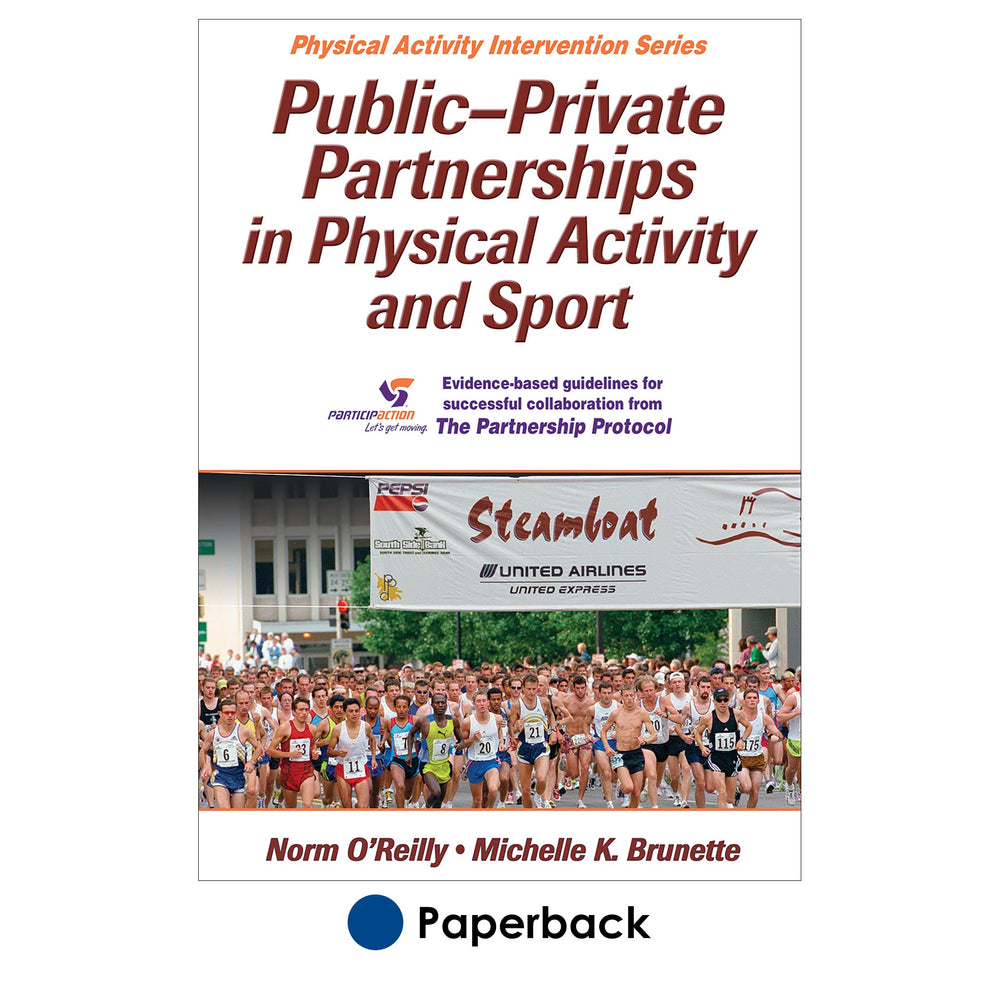
Public–Private Partnerships in Physical Activity and Sport is a guide for nonprofit, charity, and sport organizations in developing and maintaining strategic and responsible relationships with corporate partners. With its comprehensive and practical examination, this text is also relevant to private sector corporations seeking public sector partners and for agencies seeking to broker such partnerships.
This text is drawn from the collaboration of leaders in public and private organizations, athletes, and academics who identified a need to provide formalized direction on partnerships between the public and private sectors. Authors O’Reilly and Brunette present a detailed discussion of the pros and cons of establishing partnerships between not-for-profits and private sector organizations. They also provide a thorough understanding of the issues and illustrate how a responsible implementation of these partnerships can benefit all parties involved. They offer strategies and tactics for finding, developing, implementing, and evaluating public–private partnerships and highlight how partnership and social marketing studies outside of public health and health promotion can inform these growing disciplines.
Providing guidelines from the World Health Organization and other entities worldwide, this resource offers readers a framework for forming and maintaining beneficial partnerships. Readers will also find the Partnership Protocol, a public health-centered collaborative initiative led by ParticipACTION, which provides evidence-based public–private partnership guidelines for practitioners. A foreword by Kelly Murumets of ParticipACTION, an advocate of partnership building in the public health sphere, emphasizes the value of this resource in confronting the challenges of public–private partnerships in a thoughtful and responsible way.
Throughout, Executive Perspective sidebars provide expert commentaries on partnership from experienced individuals in both private industry and public health organizations. These sidebars include Global Application questions that provide insight into issues and obstacles overcome in creating public–private partnerships in the contexts of public health and health care. Case studies throughout the book help readers understand how partnerships and social marketing strategies can be successfully implemented.
This comprehensive text shows how public–private partnerships done properly expand markets, increase efficiency, provide resources, allow access to expertise, and provide platforms for marketing, activation, and programs. Public–Private Partnerships in Physical Activity and Sport provides information, guidance, and tools to help readers make partnerships work most effectively for their organizations according to their resources, scope, and purpose.
Public–Private Partnerships in Physical Activity and Sport is part of the Physical Activity Intervention Series. This timely series provides educational resources for professionals interested in promoting and implementing physical activity programs to a diverse and often resistant population.
Audience
Resource for public health officials and sport, recreation, and health professionals in not-for-profit and government settings seeking to build successful partnerships with private sector organizations and vice versa. Also a text for upper-level undergraduate or graduate students in health promotion, public health, sport administration, and recreation management.
Part I: The Need for Public–Private Partnerships in Physical Activity and Health
Chapter 1. Finding Consensus in How to Develop Partnerships
Defining Partnerships
Role of Partnerships in Physical Activity and Health
Conclusion
Chapter 2. The Partnership Protocol
ParticipACTION
The Partnership Protocol
Guidelines for Effective Partnerships
Conclusion
Part II: Public–Private Partnership Strategies
Chapter 3. Basics of Messaging and Marketing in Physical Activity and Health
Importance of a Good Communications Strategy
Communications Strategies
Marketing for Behavioral Change
Communicating Through Social Media
Harnessing Tools of Inactivity to Promote Physical Activity
Communicating Across Cultures
Conclusion
Chapter 4. The Value of Sponsorship in Physical Activity, Sport Participation, and Health
Image Transfer
Stakeholders: Sponsors, Sponsees, and Agencies
Size and Scope of the Sponsorship Industry
Strategic Sponsorship
Finding a Sponsor for your Not-for-Profit
Finding a Not-for-Profit Sponsee for your for-Profit Corporation
Profile of a Sponsee
Conclusion
Chapter 5. Revenue Strategies for Not-for-Profit Organizations
Data on Sport and Recreation Organizations
Government Sources
Fees for Goods and Services
Philanthropic Sources
Conclusion
Chapter 6. Dimensions of Corporate Philanthropy and Partnerships
Corporate Support for Not-for-Profits
Corporate Donations
In-Kind Donations of Goods and Services
Sponsorships
Cause-Related Marketing
Employee Volunteering
Conclusion
Chapter 7. Role Models and Champions Role Models
From Role Model to Champion
Champions in Action
Conclusion
Chapter 8. Leveraging Corporate Social Responsibility to Partner With Corporations
Introducing CSR
Corporate Perspective on Partnerships
Integrate CSR to Attract Partners
How CSR Can Improve Partnerships
Examples of CSR in Partnerships
Conclusion
Part III: Putting Partnership Guidelines Into Action
Chapter 9. Global, National, Community Partnership Perspectives
Partnering Across Sectors
Global Perspectives
Conclusion
Chapter 10. Applying Partnership Guidelines in Physical Activity and Health
CATCH Case Study
Partnerships Examples
Conclusion
Chapter 11. Challenges in Creating Effective Partnerships: Bias, Controversy, and Failure
Measuring Partnership Effectiveness
Elements of an Effective Partnership
Key Partnership Challenges
Avoiding Partnership Breakdown Through Good Management
Conclusion
"The information provided in this book highlights successful partnerships between nonprofit and for-profit organizations that achieve positive outcomes for both entities in today’s challenging economy.”
Cary Wing, EdD-- Principal, CHW Global
“O’Reilly and Brunette present a compelling protocol for best practices in finding, developing, implementing, and measuring the effectiveness of public not-for-profit partnerships.”
David A. Pettrone Swalve-- Vice President of Education, National Academy of Sports Medicine (NASM)